
Interview: Dr. Michael Kramp on "Jane Austen and the Future of the Humanities"
Participants:
NRC: Nate Carpenter, Managing Editor for Lehigh University Press
MK: Professor Michael Kramp, Lehigh University
*this transcript has been edited from the original audio for readability and length. Listen to the entire episode on Spotify and Apple.
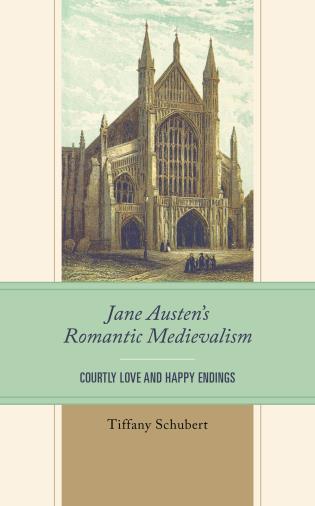
NRC: We're here today with Dr. Michael Kramp, professor in the Department of English at Lehigh University. Dr. Kramp is a scholar of 19th-century British literature, critical theory, masculinity studies, visual culture, photography, and film. He's recently published Patriarchy's Creative Resilience: Late Victorian Speculative Fiction, published by Routledge in 2024. He's also long read and written about Jane Austen. He is the author of Disciplining Love: Austen and the Modern Man (Ohio State University Press, 2007) and editor of Jane Austen and Critical Theory (Routledge, 2021) and Jane Austen and Masculinity (Bucknell University Press, 2017). Currently, he's the primary investigator for “Jane Austen and the Future of the Humanities,” a public-facing multimedia investigation into Austen and her continued significance to the humanities. Michael, congratulations on all your work and thank you for joining us.
MK: Thank you so much. It's great to be here.
NRC: You're the head of the “Jane Austen and the Future of the Humanities” project, which started at Lehigh in 2024. What are the humanities for you, and what constitutes humanistic inquiry?
MK: I think this is such a key question. When I first started the work on this project, one of the first things I did was travel to the National Humanities Center in North Carolina and interview the outgoing president, Robert Newman, and ask him this question. I'm sort of "cheating" on the answer by talking about what Dr. Newman said.
In our conversation, Dr. Newman noted that he was dean of a College of Humanities for many years, and he said students and faculty wouldn't necessarily identify as being "in the College of the Humanities." They would instead identify by discipline—saying they were a philosophy major or a theology major. So, the very concept of the humanities dissipated into disciplines.
NRC: Into disciplines.
MK: Right. And I think that's really important. Notice how different that is from the way we use the concept of STEM fields, which has a codifying, unifying practice. I think it’s much more similar for the social sciences; we say they have a unifying, codifying factor. I don't think that happens with the humanities.
There's a reason for that. We don't talk about the humanities much outside of the university. You don't go home and ask your siblings, "How did you engage with the humanities this weekend?" That conversation doesn't take place. So when we think about how we're going to talk about the humanities, I don't think the "list of disciplines" issue is all that helpful. We can talk about the deep-rooted scholastic tradition, but that gets old-fashioned really quickly.
I think what's more useful is to think about a series of methods. I like to do that for a couple of reasons: one, I think it's more clear; and two, it helps enunciate that in the humanities, we actually do have practices that we follow. For example, the humanities are really good at asking questions. Science is fantastic at asking questions too, but the humanities are very good at a sort of interrogation.
The humanities are also very good at connecting—identifying the ways in which this problem over here is connected with that problem over there. We're not looking to collapse those connections; we're looking to demonstrate how they are real, tangible, and lasting. The last method I want to hold on to is that we're really good at "making a mess." The humanities are especially good at demonstrating that we shouldn't oversimplify; we should complicate. We take a situation and realize the relationship between environmental sustainability and economic inequality is a messy one. Let's not try to collapse it into a 30-second TED Talk. Let's actually ask questions about it.
NRC: That resonates a lot. As I was thinking about our conversation today, I came across a 2022 essay by Judith Butler on the future of humanity. She talks about the difference between an instrumentalist view of humanities—in the sense of "this is going to help STEM fields"—versus articulating its intrinsic value. She notes that humanities scholars have a tendency to turn questions inside out, and that this is intrinsic to humanistic inquiry because things are complex.
This project started in 2024. Since then, we've seen the emergence of generative AI. Has that changed how you’ve approached articulating the value of humanistic inquiry?
MK: I don't think I've thought clearly about that yet, and I don't want to make up an answer that is inaccurate. I'm sure it has, but I haven't thought succinctly about the way in which my work has been affected by AI.
Can I give you a different example of something I have thought a lot about? I think political extremism has really affected the way in which I talk about the humanities. The way in which cultures around the world are more tethered to politically extremist positions has put humanistic inquiry up against the wall. If we're going to ask these tough questions and create these "messy" situations, we run the risk of exacerbating politically extremist cultures. I think that becomes a situation where the humanities are at once under threat and more important than ever.
NRC: And maybe also mobilized for very particular political purposes. There's also a danger of co-opting or reifying what humanities scholarship might be or should be.
MK: Or how it could be used?
NRC: Yeah.
MK: Absolutely. One of the prime examples of this was when I was in India, listening to scholars talk about the way in which the Indian government wants to use legends and myths about the history of Muslim leaders. How those stories, literature, and art get used by the government—that’s humanities at work, and maybe not always in the ways in which we want.
NRC: Where do you see humanistic inquiry happening outside of the university?
MK: I can tell a story about that. I just came back from Madrid where I was invited to participate in a panel discussion by the Jane Austen Society of Spain. The president, Elena Theron, invited me along with Amparo Yanos—a recent translator of Austen's letters and a former guitarist for the Spanish punk band Dover—the psychologist Dr. Mila Cahu, and Espito Freire, a great Spanish writer.
I thought Elena would organize this at one of the major universities in Madrid. Instead, she organized it at a bookstore downtown, and the place was packed—standing room only. It was a diverse group of people of various ages, and we had a bilingual discussion in English and Spanish for over two hours. Nobody left.
At one point, a young person in the audience asked about the prospects of studying literature. I said, "Just look today." The humanities are alive and thriving here in Madrid, but it's not at a university. The university doesn't "own" that. I think academics like me have sometimes messed up discussions about the humanities by being possessive or overly elitist. What's happening, whether we like it or not, is that the public is reclaiming the value of the humanities all around the world. Cultures outside the US are often doing this much better than we are.
NRC: Has your understanding of why Austen remains so significant changed since you've traveled to Madrid, India, and all over the world?
MK: I think so. I started out with a pretty clear understanding of Austen as this distinct cultural figure. There's a very short list of literary figures who are both massively canonical and massively popular—maybe 10 to 12 writers. Then you add that Austen is global, and the list gets shorter.
I think Austen has three distinct qualities. She’s massively versatile: you can adapt her into a cookbook, a Hollywood movie, an Indian serial, or an Icelandic book club. She’s massively accessible: you don't need a PhD to read her. As a colleague in India said, you can be moved by her when you're a 12-year-old girl and affected when you're a 95-year-old man. Winston Churchill read her, and so did Virginia Woolf.
Finally—and I want to connect this back to political extremism—Austen is "safe." She does not piss people off, or very rarely. She's not perceived as a threat. When I was in Sydney, Australia, an interviewee said to me, "Look, no one's calling up the school board and saying you've got to stop teaching Mansfield Park." People complain about Shakespeare or Mark Twain, but not Jane Austen.
What has changed for me is realizing the depth of those features. I didn't fully grasp the global reach until I started this work. In New Zealand, I didn't understand the ways in which she was being deployed within the culture. Scholars in Pakistan told me they use Austen as a tool for English language acquisition. In Mexico, students study her to realize that the English language is actually more complex than they thought.
NRC: In a sense, there's an almost universal appreciation for Austen, but the messages people pull out from her might not themselves be universal.
MK: It's worth pausing on that. This is what makes Austen so useful for a project like mine, but it's also what makes her attractive to white supremacist groups. Because she is so "universal" or versatile—though that first term always grabs me the wrong way—white supremacist groups can grab onto her and make her signify in a certain way. Austen is massively popular among the alt-right and various conservative racial supremacist groups.
NRC: Let's talk about the project itself. Austen and the Future of the Humanities is a podcast, a documentary film, a monograph, and an edited collection. Is that accurate?
MK: I'm trying to think of it as an ongoing public-facing project. The first phase has been the podcast, for two reasons: it’s the easiest to get going, and it allows me to essentially draft my book. Methodologically, I try to interview as many people as I can without privileging status. I don't just go after the most famous scholars; I want to talk to everyone because Austen reaches diverse public audiences.
I don't think I'm sold on a feature-length documentary anymore. I've built an extensive YouTube page with over 150 videos, and I've found that shorter clips are more attractive in this "culture of instantaneity." They get used more for teaching. So, the plan is to finish the podcast, get the videos up, and write the book. We'll see where the film goes from there.
NRC: I often think about how humanistic inquiry is informed by unexpected paths or chance. Are there individuals you’ve met over the past two years where you felt particularly fortunate to have had that conversation?
MK: Let me tell you two quick accounts. In New Zealand, I met Sam Brooks, a playwright who wrote a queer Maori adaptation of Emma called Em. It was really special to hear how a young, queer New Zealand man was imagining Austen in a new culture. He even showed up to the interview with a bottle of Sauvignon Blanc and said, "This is just what New Zealanders do."
The other was Dr. Patricia Matthew from Montclair State University. I have massive respect for her work. After our interview, she told me I had to talk to Nikki Payne. Nikki is a cultural anthropologist and a prominent African-American romance writer who has done great adaptations like Pride and Protest.
I texted Nikki, and she suggested meeting at the Bowie Public Library in Maryland. When I got there, the place was swarming with people. As a documentarian, I worried the background would be too loud and busy. I told Nikki, "This is not going to work," and she looked at me with a straight face and said, "No, this is exactly what I want. I want people to see all these young African-American people in the background of the shot."
It worked just fine. Those memories demonstrate that people have been wonderfully kind, and that there is a truly diverse range of people in the public sphere engaging with Austen.
NRC: Michael, this was wonderful. I've loved watching the project grow and I look forward to its future.
MK: Thanks so much. It’s great to be here.